BEWARE! Many blog- and websites not friendly to the violence and murder practiced by ISLAM have been infected with viruses and trojans.
See that your anti-virus software is installed and up to date. So far, I have gotten infected at Jihad Watch and warned that site of the problem.
Radarsite also appears to be infected as well as Shadow Warrior.
Please keep on visiting the above-named sites but warn the site if you find an infection
If any of you find this blog to be infected, please let me know.
I frequently run my anti-virus progam to keep the site virus-free.
Leslie White
Tuesday, December 2, 2008

Sunday, October 5, 2008
AGAINST THE JIHAD
On December 18, 2007, the following sanction appeared on the dashboard of the http://islamic-danger.blogspot.com/ blog:
This blog is in violation of Blogger's Terms of Service and is currently visible to authors only.

The answer is NOT blowing in the wind. It is given above.
AND
WHEN IT COMES TO FIGHTING ISLAM
ON JIHAD
"ISLAMIC DANGER" WAS THERE EARLY (Year 2000)
It evolved from no-holds barrred free-for-all on message boards [AOL, Yahoo], to club [Yahoo], community [Yahoo, MSN], and group [Yahoo, MSN],until it launched into the blogosphere.
Right now, we have ten [10] blogs on Blogspot--but do not be concerned, were these to be muzzled, we have blogs standing by to take over the fight at other venues.
An early start in the resistance against Islam, the original "Islamic Danger," an internet club, was formed by two founder who had met as keyboard-comrades-in-arms on internet message boards in 2000. [At AOL]
In those early--pre-9-11--days of the anti-jihad, any uncomplimentary reference to "the religion of peace" (dubbed as such by the authorities) was immediately punished by deletion of the post as "hate speech." Although rife with Jew-hatred and attacks against American values, messages posted by the followers of Islam remained, regardless of their breach of the Terms of Service (TOS).
In early 2001, the fight was moved to a more receptive venue--as an internet club "Islamic Danger"--its first incarnation [at Yahoo]. Membership in the club grew phenomenally until it led the Middle East section in membership, visits, and number of posts. This growth spurted noticeably after the Islamic attack against the United States on 9-11-01.
Visibility brought more enemies of the Islamic and Leftist persuasion. Every post was examined by the enemies of America for breaches of Terms of Service (TOS). The club was brought down by an European who "felt the pain" of the Islamics ("self-professed, perennial victims").
The original founders were banned for life from the venue, and sadly disappeared from interspace. [Like hell]
Several stalwart followers of the old "Islamic Danger" established a community with the same name at another internet venue [at MSN]. Same story repeated itself. As its membership grew, attacks by Islamics and their Leftist fellow-travellers multiplied. An attack, including the posting of hate messages and inappropriate photographs, and then running screaming "hate!" and "TOS violation!"to the "authorities" led to the sudden demise of the group.
There were several attempts to resuscitate the group--the last proving successful. As long as membership stayed under a noticeable percentage, the group was allowed to remain. Any sudden growth led to deletion of the group.
Two of these groups still exist under the old name, as well as several clones under the same management.
The "Islamic Danger" blogs you can find on the internet [the blogspot "Islamic Danger"blogs are listed at the right sidebar] were started by veterans of the early struggles to warn the West against the danger of Islamic infiltration into its lands with the aim of subjugation of free people. The goal of the Islamics, as it has been since the early days of desert brigandry under Mohammed, is to have a subjugated heavily-taxed population that the Mohammedans could then milk and live off.
The predilection for Islamics to live off the work of others is a fact that can be seen in the EU welfare states where they rushed for "asylum." Conquest by demographics is a fact of Islamic striving to conquer the free world. Their abhorrence of work can be seen from the Saudi penchant for having an oppressed and sexually brutalized foreign "underclass" do manual labor in lieu of the usual Christian and other non-Moslem slaves that have been used by Mohammedans for the past 13 centuries (1).
NOTE:
1. . . . [Donald Rumsfeld] observed that oil billions have shielded [Moslems] "from the reality of the work, effort and investment that leads to wealth for the rest of the world. Too often Muslims are against physical labor, so they bring in Koreans and Pakistanis[*] while their young people remain unemployed. An unemployed population is easy to recruit to radicalism.”
--Donald Rumsfeld
http://www.humanevents.com/article.php?id=23242
http://www.jihadwatch.org/archives/018695.php#comments
Related to the above:
Saudi Arabia is hub of world terror: The desert kingdom supplies the cash and the killers
http://www.jihadwatch.org/archives/018680.php
Comments (52)
[*] Not to forget Filipinos and Filipinas
This blog is in violation of Blogger's Terms of Service and is currently visible to authors only.

The answer is NOT blowing in the wind. It is given above.
AND
WHEN IT COMES TO FIGHTING ISLAM
ON JIHAD
"ISLAMIC DANGER" WAS THERE EARLY (Year 2000)
It evolved from no-holds barrred free-for-all on message boards [AOL, Yahoo], to club [Yahoo], community [Yahoo, MSN], and group [Yahoo, MSN],until it launched into the blogosphere.
Right now, we have ten [10] blogs on Blogspot--but do not be concerned, were these to be muzzled, we have blogs standing by to take over the fight at other venues.
An early start in the resistance against Islam, the original "Islamic Danger," an internet club, was formed by two founder who had met as keyboard-comrades-in-arms on internet message boards in 2000. [At AOL]
In those early--pre-9-11--days of the anti-jihad, any uncomplimentary reference to "the religion of peace" (dubbed as such by the authorities) was immediately punished by deletion of the post as "hate speech." Although rife with Jew-hatred and attacks against American values, messages posted by the followers of Islam remained, regardless of their breach of the Terms of Service (TOS).
In early 2001, the fight was moved to a more receptive venue--as an internet club "Islamic Danger"--its first incarnation [at Yahoo]. Membership in the club grew phenomenally until it led the Middle East section in membership, visits, and number of posts. This growth spurted noticeably after the Islamic attack against the United States on 9-11-01.
Visibility brought more enemies of the Islamic and Leftist persuasion. Every post was examined by the enemies of America for breaches of Terms of Service (TOS). The club was brought down by an European who "felt the pain" of the Islamics ("self-professed, perennial victims").
The original founders were banned for life from the venue, and sadly disappeared from interspace. [Like hell]
Several stalwart followers of the old "Islamic Danger" established a community with the same name at another internet venue [at MSN]. Same story repeated itself. As its membership grew, attacks by Islamics and their Leftist fellow-travellers multiplied. An attack, including the posting of hate messages and inappropriate photographs, and then running screaming "hate!" and "TOS violation!"to the "authorities" led to the sudden demise of the group.
There were several attempts to resuscitate the group--the last proving successful. As long as membership stayed under a noticeable percentage, the group was allowed to remain. Any sudden growth led to deletion of the group.
Two of these groups still exist under the old name, as well as several clones under the same management.
The "Islamic Danger" blogs you can find on the internet [the blogspot "Islamic Danger"blogs are listed at the right sidebar] were started by veterans of the early struggles to warn the West against the danger of Islamic infiltration into its lands with the aim of subjugation of free people. The goal of the Islamics, as it has been since the early days of desert brigandry under Mohammed, is to have a subjugated heavily-taxed population that the Mohammedans could then milk and live off.
The predilection for Islamics to live off the work of others is a fact that can be seen in the EU welfare states where they rushed for "asylum." Conquest by demographics is a fact of Islamic striving to conquer the free world. Their abhorrence of work can be seen from the Saudi penchant for having an oppressed and sexually brutalized foreign "underclass" do manual labor in lieu of the usual Christian and other non-Moslem slaves that have been used by Mohammedans for the past 13 centuries (1).
NOTE:
1. . . . [Donald Rumsfeld] observed that oil billions have shielded [Moslems] "from the reality of the work, effort and investment that leads to wealth for the rest of the world. Too often Muslims are against physical labor, so they bring in Koreans and Pakistanis[*] while their young people remain unemployed. An unemployed population is easy to recruit to radicalism.”
--Donald Rumsfeld
http://www.humanevents.com/article.php?id=23242
http://www.jihadwatch.org/archives/018695.php#comments
Related to the above:
Saudi Arabia is hub of world terror: The desert kingdom supplies the cash and the killers
http://www.jihadwatch.org/archives/018680.php
Comments (52)
[*] Not to forget Filipinos and Filipinas
Tuesday, September 2, 2008
UP CLOSE AND PERSONAL
Memories of Wars and Insurrections
When I was a boy, we lived in a place where, whilst I played with my toy lead soldiers, the cannons boomed. At another time, I watched soldiers marching on the main thoroughfare followed by rumbling tanks. War and violence were never far away.
Years after that, we lived in places where soldiers with submachine guns stood guard and patrolled the streets. In one place, I was mistaken for the local government commandant, during a guerrilla war--not an experience to be emulated. During that same "trouble," the undercover military intelligence of that government, thought me to be in league with the guerrillas. Also not an enviable position.
In another country, I rushed home to protect wife and children--unarmed, because guns were not allowed for civilians, but reserved for government forces, revolutionaries, and criminals---because rumors spread that they were sacking the homes of the Americans. The rumors were false, but two houses down the street, they sacked the house of the Army intelligence chief--who had fled the country, with his family, just in time. The speed with which the band that demolished that house did the job was unimaginable. There was no police, not even traffic laws were obeyed. The dictatorship had fallen.
I was the guest of foreign guerrilla facilitators in the United States and went into their country during their war. I saw American forces on clandstine missions, when not many back home in the U.S. outside the government knew that these were going on.
War and violence are never far away. History is the retelling.
Here are a couple of glimpses into my past life:
[Note: While in Honduras, during the mid 1980s, I observed U.S. Special Forces operations there.
-Leslie White - Islamic Danger blogspot contributor. . . . ]
"Now I'm hiding in Honduras
I'm a desperate man
Send lawyers, guns and money
The shit has hit the fan"
--Warren Zevon
from http://islamicdangerfu.blogspot.com/2007/12/trouble-from-south-latin-american.html (Hint: see under "Honduras")
and
[On a personal note: I (Leslie White) met with a Texaco executive and was offered job possibilities in Saudi Arabia (with Aramco) and, when I declined because of the repressive conditions in the oil camps in Arabia (1), exploration opportunities in Turkey. I refused to consider these possible positions because I did not want to work nor set foot in any Islamic country. This was some time ago, so that my aversion to Islam predates the present confrontation with that ideology now again on the war path (jihad).]
_________________________
1. The agreement signed between Socal and the Saudis made patently clear that the Americans were in Arabia at the invitation of the Saudis and would adhere to the customs of the people and the land. That meant, among other restrictions, alcohol was strictly forbidden and consorting in any fashion with the women of Saudi Arabia was a crime punishable by death. In the eyes of the Saudis, the Americans were infidels, working in their lands at their own invitation and for Arab profit.
NOTE: "a crime punishable by death . . . Americans were infidels . . . " unless you were really greedy for money or strapped for it, you had to be nuts to work under these conditions. Oh, and by the way, if you went outside the American camps, and were seen smoking, any Arab could slap the cigarette out of your mouth with impunity. I know this from personal communication by an American who had worked in Sowdi. lw. And then about alcohol . . . strictly forbidden; lashes could be given for an infraction, and one British woman--I believe she had been a nurse--was sentenced to a whole shtload of those (sentence never carried out though).
from http://islamicdanger4u.blogspot.com/2008/01/pissed-off-by-price-of-gas-gasoline.html [where you can find this personal note under the heading "The Arabian-American Oil Company (Aramco)"--hint: look for the blue-colored typeface]
Should you want to contact me, leave a "Comment" stating so. I shall publish an e-mail address for that purpose here (at this post).
When I was a boy, we lived in a place where, whilst I played with my toy lead soldiers, the cannons boomed. At another time, I watched soldiers marching on the main thoroughfare followed by rumbling tanks. War and violence were never far away.
Years after that, we lived in places where soldiers with submachine guns stood guard and patrolled the streets. In one place, I was mistaken for the local government commandant, during a guerrilla war--not an experience to be emulated. During that same "trouble," the undercover military intelligence of that government, thought me to be in league with the guerrillas. Also not an enviable position.
In another country, I rushed home to protect wife and children--unarmed, because guns were not allowed for civilians, but reserved for government forces, revolutionaries, and criminals---because rumors spread that they were sacking the homes of the Americans. The rumors were false, but two houses down the street, they sacked the house of the Army intelligence chief--who had fled the country, with his family, just in time. The speed with which the band that demolished that house did the job was unimaginable. There was no police, not even traffic laws were obeyed. The dictatorship had fallen.
I was the guest of foreign guerrilla facilitators in the United States and went into their country during their war. I saw American forces on clandstine missions, when not many back home in the U.S. outside the government knew that these were going on.
War and violence are never far away. History is the retelling.
Here are a couple of glimpses into my past life:
[Note: While in Honduras, during the mid 1980s, I observed U.S. Special Forces operations there.
-Leslie White - Islamic Danger blogspot contributor. . . . ]
"Now I'm hiding in Honduras
I'm a desperate man
Send lawyers, guns and money
The shit has hit the fan"
--Warren Zevon
from http://islamicdangerfu.blogspot.com/2007/12/trouble-from-south-latin-american.html (Hint: see under "Honduras")
and
[On a personal note: I (Leslie White) met with a Texaco executive and was offered job possibilities in Saudi Arabia (with Aramco) and, when I declined because of the repressive conditions in the oil camps in Arabia (1), exploration opportunities in Turkey. I refused to consider these possible positions because I did not want to work nor set foot in any Islamic country. This was some time ago, so that my aversion to Islam predates the present confrontation with that ideology now again on the war path (jihad).]
_________________________
1. The agreement signed between Socal and the Saudis made patently clear that the Americans were in Arabia at the invitation of the Saudis and would adhere to the customs of the people and the land. That meant, among other restrictions, alcohol was strictly forbidden and consorting in any fashion with the women of Saudi Arabia was a crime punishable by death. In the eyes of the Saudis, the Americans were infidels, working in their lands at their own invitation and for Arab profit.
NOTE: "a crime punishable by death . . . Americans were infidels . . . " unless you were really greedy for money or strapped for it, you had to be nuts to work under these conditions. Oh, and by the way, if you went outside the American camps, and were seen smoking, any Arab could slap the cigarette out of your mouth with impunity. I know this from personal communication by an American who had worked in Sowdi. lw. And then about alcohol . . . strictly forbidden; lashes could be given for an infraction, and one British woman--I believe she had been a nurse--was sentenced to a whole shtload of those (sentence never carried out though).
from http://islamicdanger4u.blogspot.com/2008/01/pissed-off-by-price-of-gas-gasoline.html [where you can find this personal note under the heading "The Arabian-American Oil Company (Aramco)"--hint: look for the blue-colored typeface]
Should you want to contact me, leave a "Comment" stating so. I shall publish an e-mail address for that purpose here (at this post).
Saturday, August 30, 2008
Why the West must (as must India) preserve and immerse itself in its roots, its classics
. . . without them, we are rootless, floating in a meaningless world. This return to our roots, something to keep us from drifting aimlessly, shows us from whence we came and points the way to where we have to go.
This is not in imitation of the musulman, who for every action to be taken, looks back to his koran, with nothing left to learn from before this was compiled, nothing exist for him before the the 7th Century C.E.
Our purpose here is to save our Civilization, before it is destroyed by the musulmans, and everything prior to their Mohammed is obliterated, all our antiquities gone, forever.
. . . top students in the United States chant[ed] the battlecry of the new creed, Diversity: "Hey Hey, Ho Ho, Western Culture's Got To Go."
We cannot sustain ourselves when, as Simone Weil said, ". . . the growing weakness, and . . . the disappearance, of the idea of value" is characteristic of us and our time.
[quote]
By the twentieth century . . . Plutarch's popularity began to fade. Professional classicists produced no revitalizing new edition of the Lives in modern English, and by the 1990's, classical studies had so declined in popularity that a riot at Stanford University featured thousands of the top students in the United States chanting the battlecry of the new creed, Diversity: "Hey Hey, Ho Ho, Western Culture's Got To Go." Plutarch's heroes had no place in their brave new world of gray equality, populated by puppets of money, resentful of eminence.
Moreover, all discrimination between good and bad was actively suppressed among the intelligentsia. In the words of Simone Weil: "The essential characteristic of the first half of the twentieth century is the growing weakness, and almost the disappearance, of the idea of value. ... But above all [those responsible were] the writers who were the guardians of the treasure that has been lost; and some of them now take pride in having lost it." 9
Another cause for Plutarch's loss of popularity was that reading skills declined generally with the advent more seductive entertainment such as television and Nintendo games, and the decline of public schools. Plutarch's elaborate sentence structure and long digressions, preserved in the Dryden edition, are a challenge to modern young readers of English, who, if they read at all, require a pruned-down text that gets to the point.
As classics departments continue to close, embattled scholars demand cramdown Greek grammar for all, and Greek drama in the original. The best has indeed become the enemy of the good. Scholastic diligence has produced such a dense cloud of ink that the ancient light grows dim, and so, at the end of the twentieth century, the cycle of Plutarch's popularity has reached its perigee.
But Plutarch will always come back, as he has after other dark ages. We find Plutarch surprisingly relevant today because nothing really has changed in human nature over the nineteen centuries since Plutarch wrote. As the greatest English thinker, Samuel Johnson, put it: "... we are all prompted by the same motives, all deceived by the same fallacies, all animated by hope, obstructed by danger, entangled by desire, and seduced by pleasure." The Rambler, No. 60. And we all need heroic examples to show us the way.
There is a definite effect on readers of these ancient stories. Emerson said: "We cannot read Plutarch without a tingling of the blood; and I accept the saying of the Chinese Mencius: 'A sage is the instructor of a hundred ages. When the manners of Loo are heard of, the stupid become intelligent, and the wavering, determined.' "10 The spiritually inductive power of Plutarch's heroes, apart from Plutarch's own skill at sketching character and imparting wisdom, may explain the perennial appeal of the Lives.
To the biographies of his heroes, Plutarch brought a master's eye for the essence. Impressionist artists and poets are not to be faulted for failing to record every detail of their subjects with scrupulous fidelity, and likewise we should recognize that a deft sentence from Plutarch means more than volumes from minor scribes. Historical details are only incidental to the character of Plutarch's subjects. He clearly disclaims any pretensions to being a historian at the beginning of his life of Alexander: "My intention is not to write histories, but lives." The difference between Plutarch and a dry chronicle of the times is the difference between a cake and a pile of ingredients, understanding and knowledge, a person and a corpse.
It is this difference which makes a classic. Plutarch transcends the historical subjects he deals with and the period he wrote in. As Ben Jonson said of Shakespeare, we may say of Plutarch: "He was not of an age, but for all time."
PLUTARCH
P L O U T A R X O S
(circa 45 - 125 A.D.)
Parallel Lives
http://www.e-classics.com/plutarch.htm
http://www.e-classics.com/
[end of quote]
What good is all that old stuff to us today? You may well ask. Well, look at this:
The Battle of Leuctra (371 B.C.) introduced a new tactic known to military historians as the oblique order of battle. The Thebans, who had only 6,000 men against 11,000 of the invincible Spartans, loaded their left wing with a heavy column of hoplites, spearheaded by the Sacred Band under Pelopidas. This strike force would go against the Spartan right wing, where the king of Sparta and his best troops were. Epaminondas slanted the rest of his line, so that they were opposed to the other Spartans, but out of range. The Theban army, therefore, had a local superiority of force where they actually engaged. Once Pelopidas broke through, the Thebans rolled up the flank of the opposing force, as the slanted line held the enfiladed enemy in place by a threatened attack from the front. Spartan casualties were very heavy, and the military power of Sparta ended on that day.
http://www.e-classics.com/
For a further elucidation of the battle of Leuctra, see http://www.fordham.edu/halsall/ancient/371leuctra.html
from
[quote]
Battle
The battle opened with the Spartan's mercenary peltasts (slingers, javilineers and/or skirmishers) attacking and driving back the Boeotian camp followers and others who were reluctant to fight. There followed a cavalry engagement, in which the Thebans drove their enemies off the field. Initially, the Spartan infantry were sent into disarray when their retreating cavalry hopelessly disrupted Cleombrotus's attempt to outflank the Theban phalanx, and were themselves caught on their flank by Pelopidas and the Sacred Band of Thebes. The decisive issue was then fought out between the Theban and Spartan foot.
The normal practice of the Spartans (and, indeed, the Greeks generally) was to establish their heavily armed infantry in a solid mass, or phalanx, some eight to twelve men deep. This was considered to allow for the best balance between depth (and the pushing power it provided) and width (i.e., area of coverage of the phalanx's front battle line). The infantry would advance together so that the attack flowed unbroken against their enemy. In order to combat the phalanx's infamous right-hand drift (see article phalanx for further information), Greek commanders traditionally placed their most experienced, highly regarded and, generally, deadliest troops on the right wing. By contrast, the shakiest and/or least influential troops were often placed on the left wing.
In a major break with tradition, Epaminondas massed his cavalry and a fifty-deep column of Theban infantry on his left wing, and sent forward this body against the Spartan right. His shallower and weaker center and right wing columns were drawn up so that they were progressively further to the right and rear of the proceeding column, in the so-called Echelon formation. The footsoldiers engaged, and the Spartans' twelve-deep formation on their right wing could not sustain the heavy impact of their opponents' 50-deep column. The Spartan right was hurled back with a loss of about 1,000 men, of whom 400 were Spartan citizens, including the king Cleombrotus I. By the time the Theban center and right columns advanced to the point of engaging the enemy, the Spartan right had been devastated. Seeing their right wing beaten, the rest of the Peloponnesians, who were essentially unwilling participants, retired and left the enemy in possession of the field. The arrival of a Thessalian army under Jason of Pherae persuaded a relieving Spartan force under Archidamus not to heap folly on folly and to withdraw instead, while the Thebans were persuaded not to continue the attack on the surviving Spartans.
This is not in imitation of the musulman, who for every action to be taken, looks back to his koran, with nothing left to learn from before this was compiled, nothing exist for him before the the 7th Century C.E.
Our purpose here is to save our Civilization, before it is destroyed by the musulmans, and everything prior to their Mohammed is obliterated, all our antiquities gone, forever.
. . . top students in the United States chant[ed] the battlecry of the new creed, Diversity: "Hey Hey, Ho Ho, Western Culture's Got To Go."
We cannot sustain ourselves when, as Simone Weil said, ". . . the growing weakness, and . . . the disappearance, of the idea of value" is characteristic of us and our time.
[quote]
By the twentieth century . . . Plutarch's popularity began to fade. Professional classicists produced no revitalizing new edition of the Lives in modern English, and by the 1990's, classical studies had so declined in popularity that a riot at Stanford University featured thousands of the top students in the United States chanting the battlecry of the new creed, Diversity: "Hey Hey, Ho Ho, Western Culture's Got To Go." Plutarch's heroes had no place in their brave new world of gray equality, populated by puppets of money, resentful of eminence.
Moreover, all discrimination between good and bad was actively suppressed among the intelligentsia. In the words of Simone Weil: "The essential characteristic of the first half of the twentieth century is the growing weakness, and almost the disappearance, of the idea of value. ... But above all [those responsible were] the writers who were the guardians of the treasure that has been lost; and some of them now take pride in having lost it." 9
Another cause for Plutarch's loss of popularity was that reading skills declined generally with the advent more seductive entertainment such as television and Nintendo games, and the decline of public schools. Plutarch's elaborate sentence structure and long digressions, preserved in the Dryden edition, are a challenge to modern young readers of English, who, if they read at all, require a pruned-down text that gets to the point.
As classics departments continue to close, embattled scholars demand cramdown Greek grammar for all, and Greek drama in the original. The best has indeed become the enemy of the good. Scholastic diligence has produced such a dense cloud of ink that the ancient light grows dim, and so, at the end of the twentieth century, the cycle of Plutarch's popularity has reached its perigee.
But Plutarch will always come back, as he has after other dark ages. We find Plutarch surprisingly relevant today because nothing really has changed in human nature over the nineteen centuries since Plutarch wrote. As the greatest English thinker, Samuel Johnson, put it: "... we are all prompted by the same motives, all deceived by the same fallacies, all animated by hope, obstructed by danger, entangled by desire, and seduced by pleasure." The Rambler, No. 60. And we all need heroic examples to show us the way.
There is a definite effect on readers of these ancient stories. Emerson said: "We cannot read Plutarch without a tingling of the blood; and I accept the saying of the Chinese Mencius: 'A sage is the instructor of a hundred ages. When the manners of Loo are heard of, the stupid become intelligent, and the wavering, determined.' "10 The spiritually inductive power of Plutarch's heroes, apart from Plutarch's own skill at sketching character and imparting wisdom, may explain the perennial appeal of the Lives.
To the biographies of his heroes, Plutarch brought a master's eye for the essence. Impressionist artists and poets are not to be faulted for failing to record every detail of their subjects with scrupulous fidelity, and likewise we should recognize that a deft sentence from Plutarch means more than volumes from minor scribes. Historical details are only incidental to the character of Plutarch's subjects. He clearly disclaims any pretensions to being a historian at the beginning of his life of Alexander: "My intention is not to write histories, but lives." The difference between Plutarch and a dry chronicle of the times is the difference between a cake and a pile of ingredients, understanding and knowledge, a person and a corpse.
It is this difference which makes a classic. Plutarch transcends the historical subjects he deals with and the period he wrote in. As Ben Jonson said of Shakespeare, we may say of Plutarch: "He was not of an age, but for all time."
PLUTARCH
P L O U T A R X O S
(circa 45 - 125 A.D.)
Parallel Lives
http://www.e-classics.com/plutarch.htm
http://www.e-classics.com/
[end of quote]
What good is all that old stuff to us today? You may well ask. Well, look at this:
The Battle of Leuctra (371 B.C.) introduced a new tactic known to military historians as the oblique order of battle. The Thebans, who had only 6,000 men against 11,000 of the invincible Spartans, loaded their left wing with a heavy column of hoplites, spearheaded by the Sacred Band under Pelopidas. This strike force would go against the Spartan right wing, where the king of Sparta and his best troops were. Epaminondas slanted the rest of his line, so that they were opposed to the other Spartans, but out of range. The Theban army, therefore, had a local superiority of force where they actually engaged. Once Pelopidas broke through, the Thebans rolled up the flank of the opposing force, as the slanted line held the enfiladed enemy in place by a threatened attack from the front. Spartan casualties were very heavy, and the military power of Sparta ended on that day.
http://www.e-classics.com/
For a further elucidation of the battle of Leuctra, see http://www.fordham.edu/halsall/ancient/371leuctra.html
from
[quote]
Battle
The battle opened with the Spartan's mercenary peltasts (slingers, javilineers and/or skirmishers) attacking and driving back the Boeotian camp followers and others who were reluctant to fight. There followed a cavalry engagement, in which the Thebans drove their enemies off the field. Initially, the Spartan infantry were sent into disarray when their retreating cavalry hopelessly disrupted Cleombrotus's attempt to outflank the Theban phalanx, and were themselves caught on their flank by Pelopidas and the Sacred Band of Thebes. The decisive issue was then fought out between the Theban and Spartan foot.
The normal practice of the Spartans (and, indeed, the Greeks generally) was to establish their heavily armed infantry in a solid mass, or phalanx, some eight to twelve men deep. This was considered to allow for the best balance between depth (and the pushing power it provided) and width (i.e., area of coverage of the phalanx's front battle line). The infantry would advance together so that the attack flowed unbroken against their enemy. In order to combat the phalanx's infamous right-hand drift (see article phalanx for further information), Greek commanders traditionally placed their most experienced, highly regarded and, generally, deadliest troops on the right wing. By contrast, the shakiest and/or least influential troops were often placed on the left wing.
In a major break with tradition, Epaminondas massed his cavalry and a fifty-deep column of Theban infantry on his left wing, and sent forward this body against the Spartan right. His shallower and weaker center and right wing columns were drawn up so that they were progressively further to the right and rear of the proceeding column, in the so-called Echelon formation. The footsoldiers engaged, and the Spartans' twelve-deep formation on their right wing could not sustain the heavy impact of their opponents' 50-deep column. The Spartan right was hurled back with a loss of about 1,000 men, of whom 400 were Spartan citizens, including the king Cleombrotus I. By the time the Theban center and right columns advanced to the point of engaging the enemy, the Spartan right had been devastated. Seeing their right wing beaten, the rest of the Peloponnesians, who were essentially unwilling participants, retired and left the enemy in possession of the field. The arrival of a Thessalian army under Jason of Pherae persuaded a relieving Spartan force under Archidamus not to heap folly on folly and to withdraw instead, while the Thebans were persuaded not to continue the attack on the surviving Spartans.


Seeing their right wing beaten, the rest of the Peloponnesians (unwilling participants) retired and left the enemy in possession of the field. The arrival of a Thessalian army under Jason of Pherae persuaded a relieving Spartan force under Archidamus not to heap folly on folly and to withdraw instead, while the Thebans were persuaded not to continue the attack on the surviving Spartans. But the battle is none the less of great significance in Greek history. It marks a revolution in military tactics, affording the first known instance of a deliberate concentration of attack upon the vital point of the enemy's line. Its political effects were equally far-reaching: The loss in material strength and prestige which the Spartans here sustained went part of the way in depriving them forever of their supremacy in Greece.
http://www.mlahanas.de/Greeks/History/Battles/Leuctra.html
A good prelude to the battle of Leuctra is given at
http://monolith.dnsalias.org/~marsares/warfare/battle/leuctra.html
Thursday, August 28, 2008
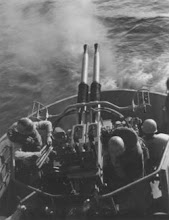
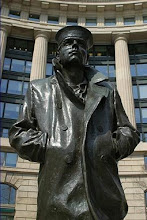
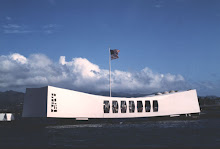
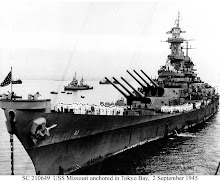
I WAS A SAILOR ONCE
Sharing a glimpse of the life I so dearly loved...
by "a sailor once"
I liked standing on the bridge wing at sunrise with salt spray in my face and clean ocean winds whipping in from the four quarters of the globe.
I liked the sounds of the Navy - the piercing trill of the boatswains pipe, the syncopated clangor of the ship's bell on the quarterdeck, harsh, and the strong language and laughter of sailors at work.
I liked Navy vessels -- plodding fleet auxiliaries like the USS Ute ATF-76) and amphibs, sleek submarines and steady solid aircraft carriers.
I liked the proud names of Navy ships: Midway, Lexington, Saratoga, Coral Sea, Antietam, Valley Forge - - memorials of great battles won and tribulations overcome.
I liked the lean angular names of Navy "tin-cans" and escorts like the USS Maddox (DD-731) mementos of heroes who went before us
And the others - - San Jose, San Diego, Los Angeles, St. Paul, Chicago, Oklahoma City, named for our cities
I liked the tempo of a Navy band.
I liked liberty call and the spicy scent of a foreign port
I even liked the never ending paperwork and all hands working parties as my ship filled herself with the multitude of supplies, both mundane and to cut ties to the land and carry out her mission anywhere on the globe where there was water to float her.
I liked sailors, officers and enlisted men from all parts of the land, farms of the Midwest, small towns of New England, from the big cities, the mountains and the prairies, from all walks of life.
I trusted and depended on them as they trusted and depended on me -- for professional competence, for comradeship, for strength and courage. In a word, they were "shipmates"; then and forever.
I liked the surge of adventure in my heart, when the word was passed: ''Now Hear This'' "Now station the special sea and anchor detail – all hands to quarters for leaving port," and I liked the infectious thrill of sighting home again, with the waving hands of welcome from family and friends waiting pier side
The work was hard and dangerous; the going rough at times; the parting from loved ones painful, but the companionship of robust Navy laughter, the "all for one and one for all" philosophy of the sea was ever present.
I liked the fierce and dangerous activity on the flight deck of aircraft carriers, earlier named for battles won but sadly now named for politicians. Enterprise, Independence, Boxer, Princeton and oh so many more, some lost in battle, and sadly many scrapped.
I liked the scent of aviation hi-octane fuel, and now jet . . . as the men in purple shirts hustled about to "feed" the flying weapons of war.
And the crews in red shirts rearming the aircraft for their next sortie.
I liked the flight crews readying their flying machines with the green shirted and brown shirted crews ensuring worthiness.
And then the white shirted crews directing the aircraft to the catapult followed by the crescendo of the aircraft shooting down the cat track and into the air.
I liked the feel of flying with a fine tuned air wing where all of the aircrews knew what to do and did it safely and well
I liked the exciting recovery of aircraft as they returned from combat or training. It was always an exciting event whether a landing was a trap or a bolter.
I liked the names of the aircraft and helicopters; Skyraider, Intruder, Sea King, Phantom, Skyhawk, Demon, Skywarrior, Corsair, and many more that bring to mind offensive and defensive orders of battle
I liked the excitement of an alongside replenishment as my ship slid in alongside the oiler and the cry of "Standby to receive shotlines" prefaced the hard work of rigging spanwires and fuel hoses echoed across the narrow gap of water between the ships and welcomed the mail and fresh milk, fruit and vegetables that sometimes accompanied the fuel.
I liked the serenity of the sea after a day of hard ship's work, as flying fish flitted across the wave tops and sunset gave way to night.
I liked the feel of the Navy in darkness - the masthead and range lights, the red and green navigation lights and stern light, the pulsating phosphorescence of radar repeaters - they cut through the dusk and joined with the mirror of stars overhead.
And I liked drifting off to sleep lulled by the myriad noises large and small that told me that my ship was alive and well, and that my shipmates on watch would keep me safe.
I liked quiet mid-watches with the aroma of strong coffee -- the lifeblood of the Navy permeating everywhere.
I liked the sudden electricity of "General quarters, general quarters, all hands man your battle stations," followed by the hurried clamor of running feet on ladders and the resounding thump of watertight doors as the ship transformed herself in a few brief seconds from a peaceful workplace to a weapon of war -- ready for anything.
And I liked the sight of space-age equipment manned by youngsters clad in dungarees and sound-powered phones that their grandfathers would still recognize.
I liked the traditions of the Navy and the men and now women who made them.
I liked the proud names of Navy heroes: Halsey, Nimitz, Perry, Farragut, John Paul Jones and Burke.
A sailor could find much in the Navy: comrades-in-arms, pride in self and country, mastery of the seaman's trade. An adolescent could find adulthood.
In years to come, when sailors are home from the sea, AND SO WE ARE, we still remember with fondness and respect the ocean in all its moods – the impossible shimmering mirror calm and the storm-tossed green water surging over the bow.
And then there will come again a faint whiff of stack gas, a faint echo of engine and rudder orders, a vision of the bright bunting of signal flags snapping at the yardarm, a refrain of hearty laughter in the wardroom and chief's quarters and mess decks.
Remembering this, WE stand taller and say, “I WAS A SAILOR ONCE."
by "a sailor once"
I liked standing on the bridge wing at sunrise with salt spray in my face and clean ocean winds whipping in from the four quarters of the globe.
I liked the sounds of the Navy - the piercing trill of the boatswains pipe, the syncopated clangor of the ship's bell on the quarterdeck, harsh, and the strong language and laughter of sailors at work.
I liked Navy vessels -- plodding fleet auxiliaries like the USS Ute ATF-76) and amphibs, sleek submarines and steady solid aircraft carriers.
I liked the proud names of Navy ships: Midway, Lexington, Saratoga, Coral Sea, Antietam, Valley Forge - - memorials of great battles won and tribulations overcome.
I liked the lean angular names of Navy "tin-cans" and escorts like the USS Maddox (DD-731) mementos of heroes who went before us
And the others - - San Jose, San Diego, Los Angeles, St. Paul, Chicago, Oklahoma City, named for our cities
I liked the tempo of a Navy band.
I liked liberty call and the spicy scent of a foreign port
I even liked the never ending paperwork and all hands working parties as my ship filled herself with the multitude of supplies, both mundane and to cut ties to the land and carry out her mission anywhere on the globe where there was water to float her.
I liked sailors, officers and enlisted men from all parts of the land, farms of the Midwest, small towns of New England, from the big cities, the mountains and the prairies, from all walks of life.
I trusted and depended on them as they trusted and depended on me -- for professional competence, for comradeship, for strength and courage. In a word, they were "shipmates"; then and forever.
I liked the surge of adventure in my heart, when the word was passed: ''Now Hear This'' "Now station the special sea and anchor detail – all hands to quarters for leaving port," and I liked the infectious thrill of sighting home again, with the waving hands of welcome from family and friends waiting pier side
The work was hard and dangerous; the going rough at times; the parting from loved ones painful, but the companionship of robust Navy laughter, the "all for one and one for all" philosophy of the sea was ever present.
I liked the fierce and dangerous activity on the flight deck of aircraft carriers, earlier named for battles won but sadly now named for politicians. Enterprise, Independence, Boxer, Princeton and oh so many more, some lost in battle, and sadly many scrapped.
I liked the scent of aviation hi-octane fuel, and now jet . . . as the men in purple shirts hustled about to "feed" the flying weapons of war.
And the crews in red shirts rearming the aircraft for their next sortie.
I liked the flight crews readying their flying machines with the green shirted and brown shirted crews ensuring worthiness.
And then the white shirted crews directing the aircraft to the catapult followed by the crescendo of the aircraft shooting down the cat track and into the air.
I liked the feel of flying with a fine tuned air wing where all of the aircrews knew what to do and did it safely and well
I liked the exciting recovery of aircraft as they returned from combat or training. It was always an exciting event whether a landing was a trap or a bolter.
I liked the names of the aircraft and helicopters; Skyraider, Intruder, Sea King, Phantom, Skyhawk, Demon, Skywarrior, Corsair, and many more that bring to mind offensive and defensive orders of battle
I liked the excitement of an alongside replenishment as my ship slid in alongside the oiler and the cry of "Standby to receive shotlines" prefaced the hard work of rigging spanwires and fuel hoses echoed across the narrow gap of water between the ships and welcomed the mail and fresh milk, fruit and vegetables that sometimes accompanied the fuel.
I liked the serenity of the sea after a day of hard ship's work, as flying fish flitted across the wave tops and sunset gave way to night.
I liked the feel of the Navy in darkness - the masthead and range lights, the red and green navigation lights and stern light, the pulsating phosphorescence of radar repeaters - they cut through the dusk and joined with the mirror of stars overhead.
And I liked drifting off to sleep lulled by the myriad noises large and small that told me that my ship was alive and well, and that my shipmates on watch would keep me safe.
I liked quiet mid-watches with the aroma of strong coffee -- the lifeblood of the Navy permeating everywhere.
I liked the sudden electricity of "General quarters, general quarters, all hands man your battle stations," followed by the hurried clamor of running feet on ladders and the resounding thump of watertight doors as the ship transformed herself in a few brief seconds from a peaceful workplace to a weapon of war -- ready for anything.
And I liked the sight of space-age equipment manned by youngsters clad in dungarees and sound-powered phones that their grandfathers would still recognize.
I liked the traditions of the Navy and the men and now women who made them.
I liked the proud names of Navy heroes: Halsey, Nimitz, Perry, Farragut, John Paul Jones and Burke.
A sailor could find much in the Navy: comrades-in-arms, pride in self and country, mastery of the seaman's trade. An adolescent could find adulthood.
In years to come, when sailors are home from the sea, AND SO WE ARE, we still remember with fondness and respect the ocean in all its moods – the impossible shimmering mirror calm and the storm-tossed green water surging over the bow.
And then there will come again a faint whiff of stack gas, a faint echo of engine and rudder orders, a vision of the bright bunting of signal flags snapping at the yardarm, a refrain of hearty laughter in the wardroom and chief's quarters and mess decks.
Remembering this, WE stand taller and say, “I WAS A SAILOR ONCE."
Subscribe to:
Posts (Atom)
+(3).jpg)



 Posts
Posts